What Should You Actually Put on Your Lobby TV?
A customer sits down in your waiting area. They’ve checked their phone, read the sign by the register, and now they’re looking at the TV. It’s showing a cooking competition. Someone has made a terrible decision involving scallops.
Meanwhile, you offer a service that customer might find useful—but the only mention of it is on a flyer behind the counter.
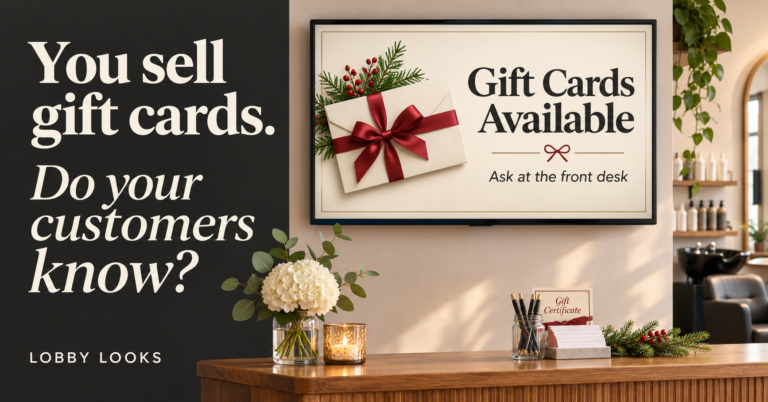
Your screen could be sharing that information. You don’t need to turn your waiting room into a nonstop commercial. Start with things customers would appreciate knowing while they’re already there.
Start with the question you answer all day
Think about what customers regularly ask you.
At a grooming salon, it might be whether you offer nail trims between full grooming appointments. At an auto repair shop, people might want to know where to leave their keys for an after-hours drop-off.
Those are good starting points because they serve a real purpose.
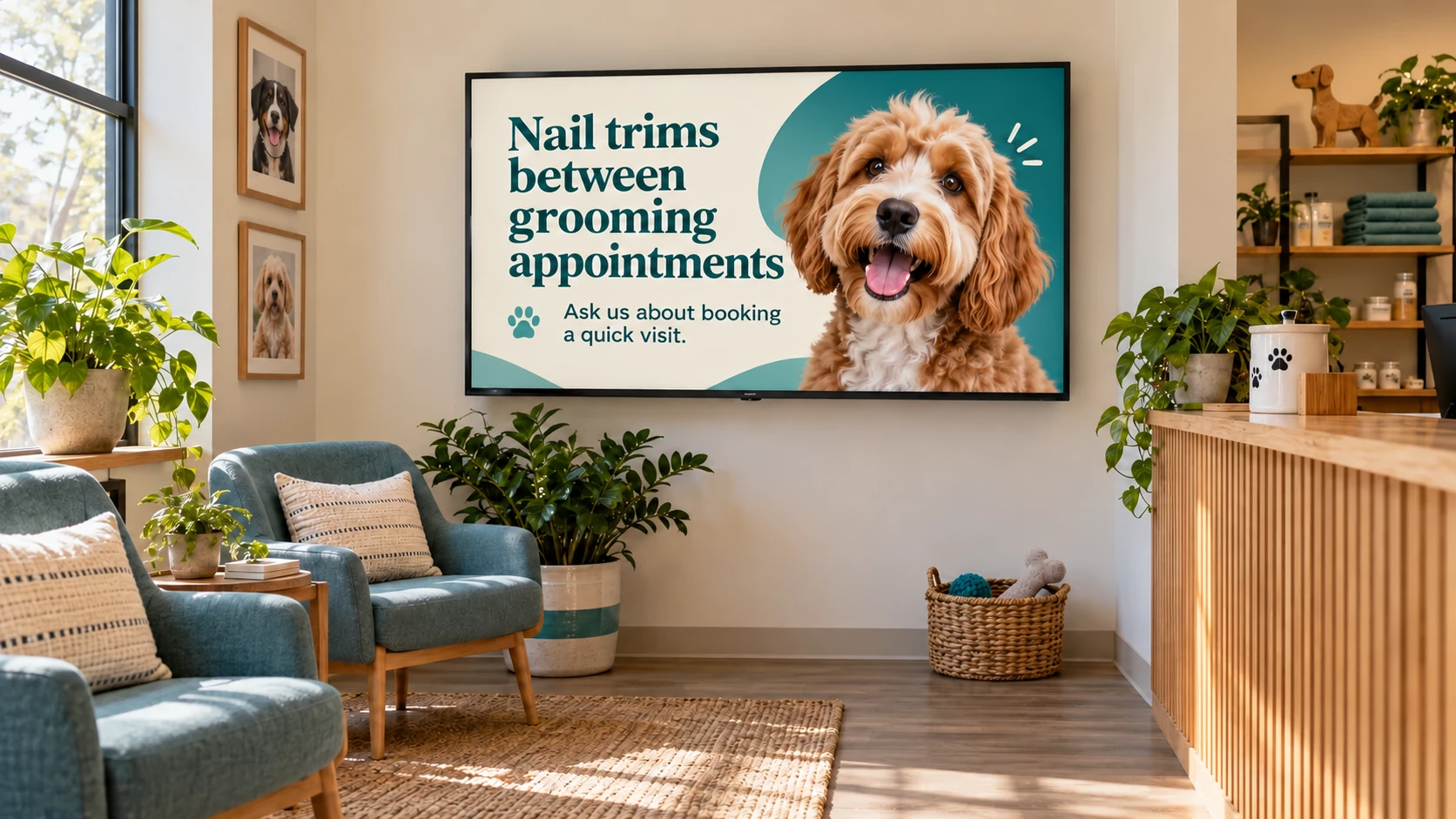
A groomer’s graphic could say:
Nail trims between grooming appointments
Ask us about booking a quick visit.
That gives someone useful information without asking them to read your entire service menu from across the room.
Choose one question for each graphic. If you’re explaining appointments, pricing, cancellation policies, and parking on the same screen, you’ve accidentally made a very large pamphlet.
Each graphic should have one job
It’s tempting to use every inch of space. You’ve got a whole TV, after all.
But empty space helps people find the message. A short headline, a relevant image, and one clear next step are often enough.
For a café, that could mean a photo of the seasonal drink with its name and price. If it’s only available through a certain date, include that too.
A hair salon could feature a service customers may not know about, such as a deep-conditioning treatment. Explain what it’s for in plain language and tell people how to ask about it. You probably don’t need the full product description from the bottle.
Before adding another sentence, ask whether the customer needs it to understand the message. If not, give it some breathing room.
Read it from the waiting chair
A graphic can look beautiful on your laptop and be nearly unreadable on the wall.
Check it from where customers actually sit or stand. Can you read the headline comfortably? Is the smaller text clear? Does the lettering stand out against the background?
Thin lettering over a busy photo is a common trouble spot. So is squeezing in extra text by making everything smaller.
If you’re showing several graphics in rotation, each one should make sense on its own. Someone walking into the room halfway through shouldn’t need the previous screen to understand this one.
Give people enough time to read the whole message comfortably before it changes.
Let the business show through
Useful content doesn’t have to look bland.
Use the colors from your signs, photos from your own shop, and the same friendly wording you’d use at the counter. A grooming salon might suit a playful pet photo. An auto shop’s drop-off instructions need a simple layout with the key details easy to spot.
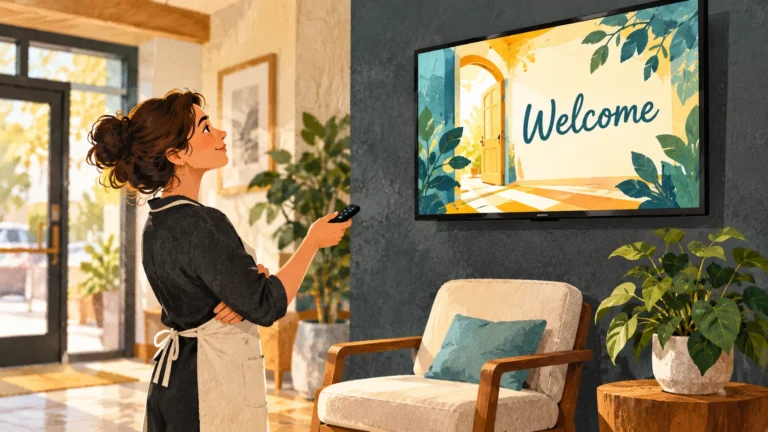
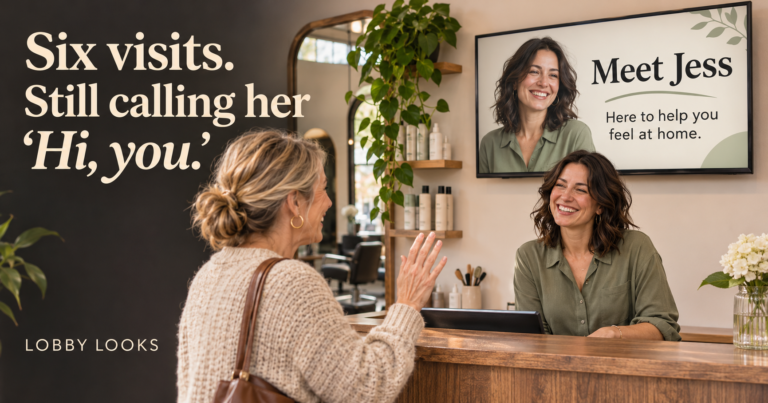
You can also include a welcome message, a staff introduction, or an explanation of what happens during an appointment.
In a veterinary waiting room, a calm reminder to keep cats in carriers and dogs leashed may be more useful than another promotion.
Keep it worth looking at
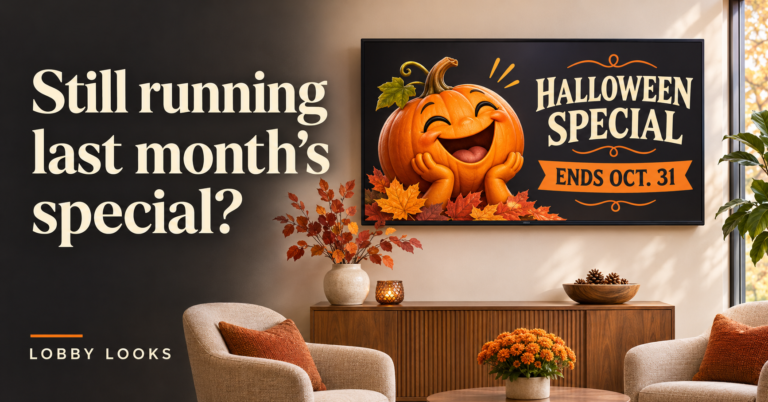
Review your screen content when something changes. Remove expired offers, update prices, and swap out seasonal messages. An outdated price can leave your staff explaining the difference at checkout.
Start with a few graphics you have a reason to show. If customers keep asking the same question, that might be your next graphic.
Lobby Looks started after I discovered how much I enjoyed creating TV graphics for a local pet grooming salon. With my graphic design background, it felt like a good way to help other small businesses put their screens to use.
If you have a lobby TV and aren’t sure what to put on it, get in touch. I’m based in Rhode Island and create custom graphics for waiting rooms and in-store displays.